
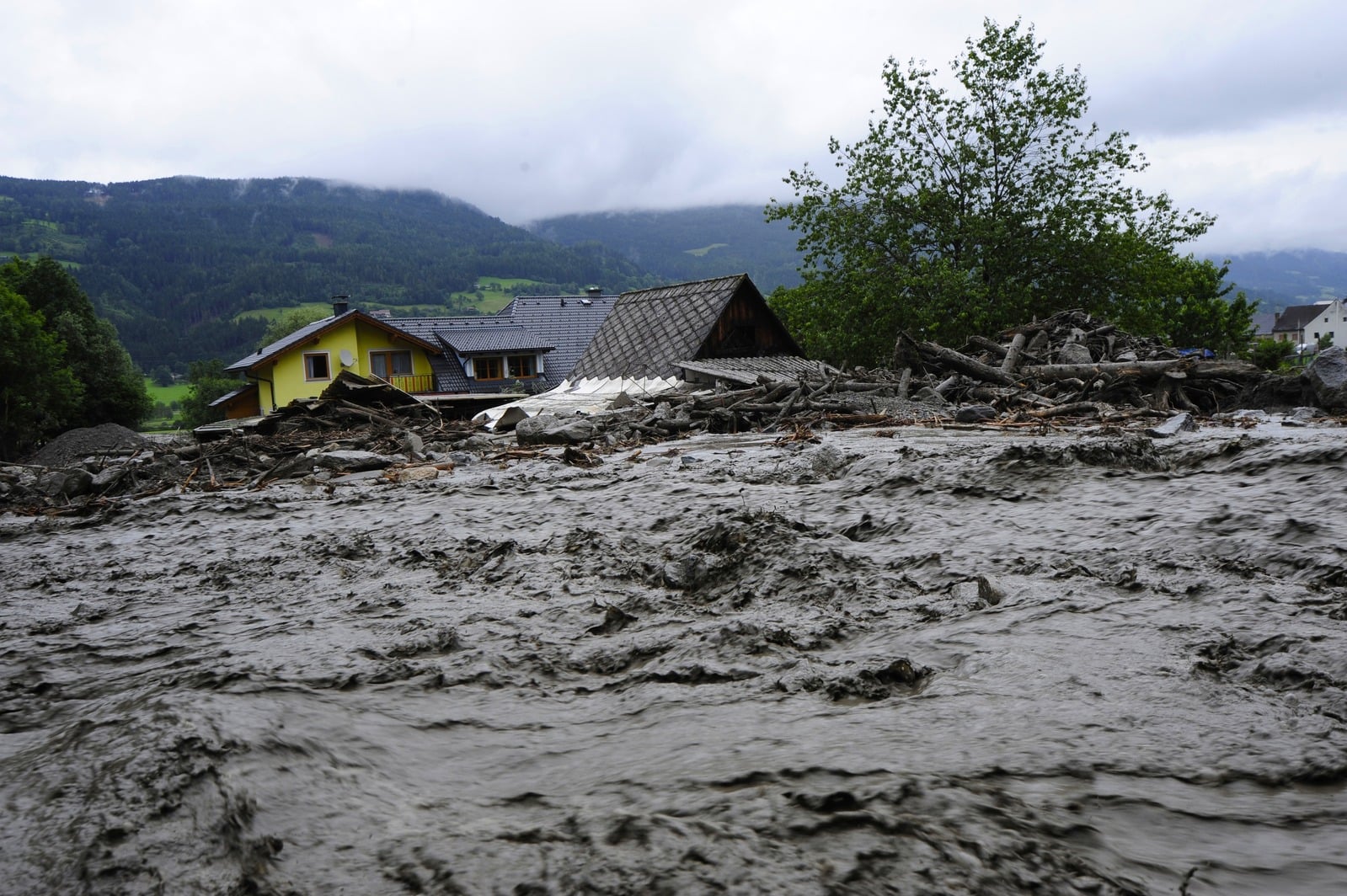
It happened with terrifying speed.
On the morning of August 26, the lower section of a glacier broke away high in the Himalayas close to the border between Nepal and Tibet.
The collapse sent an avalanche of ice and rock hundreds of metres onto the valley floor before a torrent of mud, water and debris swept through the mountain river system below.
Villages were inundated, homes disappeared, roads and bridges were swept away, while power stations and communications infrastructure were badly damaged.
On the Tibetan side of the border, the torrent struck the important Gyirong crossing before surging into Nepal, where communities in Rasuwa district were among the worst affected.
And much of the terrifying reality of what followed was captured on mobile phones.
Footage shared on social media showed huge torrents of brown water, mud and debris ripping through the valleys. People fled towards higher ground as the flood advanced, while other images captured the surge crashing through bridges and sweeping away buildings and vehicles.
“Footage of the flood initially circulated on Chinese social media before disappearing from platforms.”
For a disaster unfolding in one of the world's most remote mountainous regions, mobile-phone footage provided an extraordinary window on events. Images recorded by those caught in its path were shared around the world within hours.
But the picture from across the border in Chinese-controlled Tibet has been much less clear. The flood devastated the Gyirong border crossing and affected communities on the Tibetan side, but independent reporting from the region has been extremely limited.
Foreign journalists are not permitted to travel independently in Tibet and requests by international media to visit the disaster area have been refused.
Footage of the flood initially circulated on Chinese social media before disappearing from platforms. ABC News reported that articles published by some smaller Chinese state media outlets, including interviews with witnesses, were also subsequently removed.
Chinese state media has reported casualties, rescue operations and the government response, but much of the independent reporting about the human impact of the disaster has come from Nepal.
The full human cost was still emerging as Rotary Magazine prepared for publication, with search and recovery operations continuing and some remote communities difficult to reach.
What happened?
Satellite imagery and analysis by scientists indicated that a substantial section of a glacier at an altitude of about 5,200 metres had broken away.
The mass of ice and rock fell around 1,200 metres onto the valley below, triggering an avalanche and huge debris flow through the river system. Water levels downstream rose dramatically within minutes.
Initial reports suggested that an earthquake might have triggered the collapse. Subsequent analysis indicated that seismic activity detected at the time was more likely to have been caused by the enormous mass of ice and rock striking the valley floor.
The precise cause of the glacier collapse remains under investigation.
Scientists are examining whether unusually warm conditions and rapid snowmelt contributed to instability, against the wider backdrop of rapidly retreating Himalayan glaciers.
The immediate danger did not end when the first flood passed. The avalanche blocked waterways and created lakes behind accumulated debris, raising fears that water could break through and cause further flooding downstream.
“Initial reports suggested that an earthquake might have triggered the collapse.”
At one point rescue operations were temporarily halted while the stability of one of the lakes was assessed. Chinese and Nepalese authorities have continued to monitor conditions from the air and using satellite technology.
The disaster has affected communities on both sides of the international border as well as tourists and pilgrims travelling through the Himalayan region.
Many foreign visitors were in the area on their way to Mount Kailash in Tibet, which is sacred to Hindus, Buddhists, Jains and followers of the Bon religion.
As the search continued, the International Federation of Red Cross and Red Crescent Societies estimated that more than 90,000 people had been affected.
ShelterBox heads to Nepal
ShelterBox, Rotary's global partner in disaster response, launched an emergency appeal and began mobilising a team for Nepal.
As Rotary Magazine prepared for publication, a ShelterBox team was travelling to the country to assess what assistance was required.
The charity was speaking with potential partners, Rotary contacts, the Red Cross and other organisations to establish where displaced people were living and what support they needed.
Access is expected to present a significant challenge. Many affected villages are in remote mountainous locations, while roads and bridges have been destroyed and power and communications networks damaged.
ShelterBox has emergency aid pre-positioned at six locations around the world – Belgium, Barbados, Ghana, Panama, the Philippines and United Arab Emirates.
“It is not the first time ShelterBox and Rotary have responded to a major humanitarian emergency in Nepal.”
The organisation said decisions about what aid to deploy would be based on assessments from the affected areas.
It is not the first time ShelterBox and Rotary have responded to a major humanitarian emergency in Nepal. In April 2015, a magnitude 7.8 earthquake devastated large areas of the country. A second major earthquake followed the next month.
Working with Rotary, Nepal Red Cross, Asal Chhimekee Nepal and other local partners, ShelterBox provided shelter and other aid for almost 68,000 people left homeless.
The response included shelter kits and training to help families rebuild more durable homes.
The need for clean water
The destruction of water and sanitation systems has created another concern.
The World Health Organization reported damage to health facilities and disruption to water supplies and sanitation, increasing the risk of diarrhoeal and respiratory illnesses and other communicable diseases. WHO mobilised emergency health supplies as part of the response.
Rotary-linked Aquabox, which specialises in providing safe drinking water following disasters, was assessing needs with partners on the ground, including Rotary clubs in some of the affected areas.
The Derbyshire-based charity, which originated from the Rotary Club of Wirksworth, said it had existing stocks of water filters capable of supporting 15,000 displaced people.
“The World Health Organization reported damage to health facilities and disruption to water supplies and sanitation.”
Water Survival Box, another Rotary-founded humanitarian charity, was in contact with the Nepal Trust, with which it has an established working relationship.
Disaster Aid UK & Ireland was considering how it might respond as the situation developed.
Updates on their individual responses and appeals are being published through the charities' websites.
Beyond the emergency
The scale of the destruction means attention is also turning to what happens once the immediate search, rescue and relief operation ends.
Homes, roads, bridges and hydropower facilities are among the infrastructure destroyed or damaged.
The Rotary GB&I Disaster Recovery Trust has opened an appeal to support longer-term recovery.
Unlike charities providing immediate emergency relief, the Trust supports regeneration and rebuilding following disasters. It makes grants to Rotary projects working with affected communities, including schemes involving schools, infrastructure and rescue vehicles.
Since its establishment in 2007, the Trust has supported disaster recovery projects in the UK and Ireland and around the world.
Rotary GB&I has also produced fundraising materials for clubs organising collections in response to the disaster.
“Unlike charities providing immediate emergency relief, the Trust supports regeneration and rebuilding following disasters.”
Members wishing to support Rotary's wider international disaster response can also donate to The Rotary Foundation's Disaster Response Fund through Rotary Foundation United Kingdom.
For those working in the disaster zone, however, the immediate task remains locating the missing, reaching isolated communities and establishing what survivors need.
Destroyed roads, damaged communications and difficult mountain terrain have complicated that operation, while authorities have also had to monitor the possibility of further flooding.
Days after the glacier collapsed, rescue teams were still searching communities on both sides of the Nepal-Tibet border.
And with many areas difficult to reach and information from Tibet particularly limited, the full scale of one of the Himalayas' most devastating recent disasters was still being established.
How you can help
ShelterBox
Emergency shelter response and latest information from its Nepal operation.
Aquabox
Rotary-founded charity specialising in emergency water filtration.
Water Survival Box
Rotary-founded charity providing water purification and essential survival equipment.
Disaster Aid UK & Ireland
Updates on its humanitarian disaster response.
Rotary GB&I Disaster Recovery Trust
Supporting longer-term rebuilding and recovery following disasters.
Rotary Foundation United Kingdom
Information about supporting The Rotary Foundation with Gift Aid, including its Disaster Response Fund.