There was never much danger of Dolly Parton being forgotten.
Across a career spanning more than six decades, the girl from the Great Smoky Mountains of Tennessee became one of the most recognisable entertainers in the world.
She sold more than 100 million records, won 11 Grammy Awards and wrote songs which became part of popular culture. She conquered Hollywood, built a business empire and was inducted into both the Country Music Hall of Fame and Rock & Roll Hall of Fame.
But following Dolly's death on August 25 at the age of 80, another story has been told alongside the familiar tributes to the singer, songwriter and actress.
It is a story which began with her father.
Robert Lee Parton was a farmer and construction worker who had left school early and never learned to read or write. Dolly regarded him as one of the smartest people she had ever known, but believed his inability to read had prevented him from fulfilling some of his ambitions.
In 1995, she decided to do something about it.
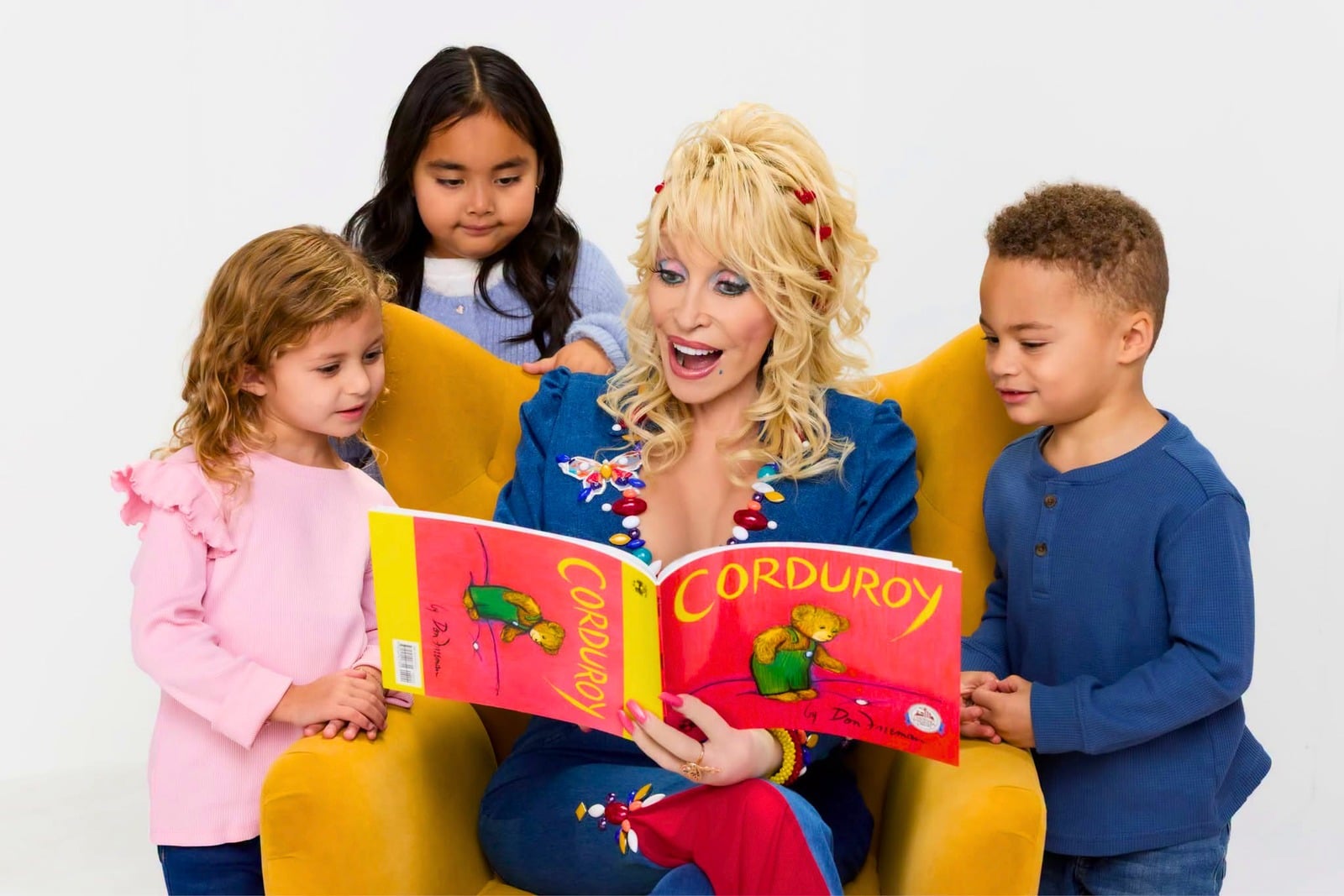
Dolly Parton's Imagination Library began in Sevier County, Tennessee, where she had grown up as one of 12 children. The idea was simple: give young children books of their own and encourage a love of reading before they ever set foot inside a classroom.
“I can’t tell you how much that meant to me because I created the Imagination Library as a tribute to my Daddy.”
Every month, from birth until their fifth birthday, a carefully chosen, age-appropriate book arrives through the post, personally addressed to the child and free to their family. Those enrolled from birth can build a library of 60 books by the age of five.
For Dolly, the project always came back to her father.
“Before he passed away, my Daddy told me the Imagination Library was probably the most important thing I had ever done,” she wrote in the Dollywood Foundation UK's 2024 annual report.
“I can’t tell you how much that meant to me because I created the Imagination Library as a tribute to my Daddy.
“In my heart, his inability to read probably kept him from fulfilling all of his dreams. Inspiring kids to love to read became my mission,” she wrote.
What began in one Tennessee county grew far beyond anything Dolly had originally imagined.
Today, the Imagination Library operates in the United States, Canada, Australia, the United Kingdom and Republic of Ireland, sending millions of books to children every month.
Dolly meets Rotary
Rotary became part of the story in 2009 when Rotary International and Dolly Parton's Imagination Library began working together, encouraging Rotary clubs to establish and support programmes in their own communities.
By the following year, more than 140 clubs were involved. And in 2010, Dolly brought her literacy message directly to Rotarians when she appeared at the Rotary International Convention in Montreal, Canada. Above, she is pictured with Rotary International President, John Germ.
The partnership reflected Rotary's long-standing commitment to literacy, with clubs able to take Dolly's idea and make it work in their own communities. Rotary, though, is only one part of a much wider network which has enabled the Imagination Library to grow.
Across the UK and Ireland, local authorities, businesses, charities, housing associations, early-years settings, trusts, foundations, individuals and Rotary clubs all help to support local programmes.
The Dollywood Foundation manages the programme nationally, while local partners promote it, register children and raise the money needed to fund the books and their delivery. Families pay nothing.
Dolly understood how important those local partnerships had become. “Of course, I have not done this alone,” she wrote. “The real heroes of our story are the thousands of local organisations who have embraced my dream and made it their own.”
From Tennessee to the UK
The Imagination Library crossed the Atlantic in 2007, when Dolly travelled to London to announce its UK launch. The first books were sent the following year.
By the end of 2024, 6,303,713 books had been mailed to children across England, Scotland, Wales and Northern Ireland. That year alone, 330 local programme partners sent almost 675,000 books to more than 76,000 children. The programme has since passed the seven million mark in the UK.
Behind those numbers are hundreds of local stories. In Renfrewshire, west of Glasgow, the Imagination Library has become woven into the lives of nurseries, families and early-years professionals.
In 2021, Renfrewshire became the first Scottish local authority to offer a universal Imagination Library. The scheme is available to children living or attending nursery in the area.
By the time of the UK Impact Report in 2024, more than 7,000 children had benefited and more than 100,000 books had been gifted.
But the Renfrewshire story is about more than parcels arriving through letterboxes.
The council created a network of more than 100 Imagination Library ambassadors working in early-years settings. The books are used to encourage reading for pleasure, but also as a starting point for activities involving literacy, numeracy and wellbeing.
One early-years professional described the scheme as particularly valuable for children experiencing difficulties with speech, language and communication.
“Because of how the books are chosen, we can include all children in our activities and allow them to learn in their own way and with their own creativity,” they said. “It’s so inclusive and that’s really important to us.”
Books through London letterboxes
Several hundred miles south, the setting is very different. Dolly Parton's Imagination Library has operated in the London Borough of Southwark since 2016.
By the time of the impact report, around 9,000 children were registered and more than 20,000 families had received almost 600,000 books.
The statistics are impressive, but the comments from parents perhaps explain the attraction better.
One described how their four-year-old looked forward to the new book arriving each month and had kept every one received since the age of one. The child now had a book corner of his own which continued to grow.
Another parent spoke of the pleasure of discovering books they would never otherwise have encountered.
And one summed up the practical reality of giving children books which actually belong to them: they were books, the parent said, that the children could “cherish and mistreat”.
Making an impact
North Lincolnshire offers another perspective. Its authority-wide Imagination Library has been operating since 2013 and, by the time of the impact report, more than one million books had been mailed to 26,696 children.
The council has also followed children through their early years and into primary school. Its findings showed that children registered with the Imagination Library were performing better in a number of early literacy measures than those who were not.
In 2022, 67.1% of children registered with the programme achieved a good level of development at the end of the Early Years Foundation Stage, compared with 52.6% of children who were not registered.
In Year 1, 74% of children who had received Imagination Library books met the expected standard in phonics, compared with 57% of those who had not.
Those figures are part of a wider picture. Research for the UK programme has found that families receiving Imagination Library books tend to read together more often. Parents have also spoken about something less easily measured: the time spent sitting with a child and sharing a story.
The UK Impact Report describes the way reading together can strengthen the bond between babies and their carers, as well as helping to develop speech, language and literacy.
There is evidence that the habit spreads beyond the home. A 2026 survey found that more than one in four participating UK families were visiting their public library more often after joining the Imagination Library.
Across the Irish Sea
The story reached the Republic of Ireland in February 2019, making it the fifth country to adopt Dolly's programme. By the end of 2024, 383,034 books had been mailed to children in Dublin, Cork and Kildare, with more than 6,000 youngsters actively enrolled.
Its largest community partner is the Childhood Development Initiative in Dublin 24, which uses the Imagination Library as part of wider work supporting family literacy and wellbeing.
In June 2024, the organisation celebrated the delivery of its 300,000th book. An Post supports the programme by helping the books reach children across the Republic.
“Let’s share this dream that all children should grow up in a home full of books,”
There is also a distinctly Irish flavour to the child's journey through the scheme.
The first book received is Watty Piper's ‘The Little Engine That Could’. If a baby is enrolled from birth, another book follows every month until, five years and potentially 60 books later, the final title arrives. The graduation book is ‘The Selfish Giant’ by Oscar Wilde.
Choosing the right books
But it is not simply about putting books through letterboxes. What arrives each month is carefully chosen.
In the UK, the books are published by Penguin Random House and selected by a panel of experts in early childhood development and reading. The selection is regularly refreshed so that families with more than one child continue to discover different titles.
The books change as the child grows. For a baby, the emphasis may be on pictures, sounds and the experience of sharing a book with a parent. Later come stories, characters, rhymes, ideas and language which help prepare a child for school.
And crucially, these are not library books which have to be returned. They belong to the child.
Dolly wanted children to grow up surrounded by books. “Let’s share this dream that all children should grow up in a home full of books,” she wrote.
Rotary's part in the story
Rotarians have been helping to make that happen for more than 15 years.
In Great Britain, that has included Rotary-supported Imagination Library projects in Nottingham and Cleethorpes, whose stories are featured elsewhere in this special edition.
Following Dolly's death in August, Rotary International General Secretary and Chief Executive Officer, John Hewko, paid tribute to a woman who had become a long-standing friend of the organisation.
“Dolly Parton understood something powerful: a child's future can change with a single book,” he said.
John recalled Rotary's collaboration with the Imagination Library from 2009 and Dolly's appearance at the Montreal Convention the following year.
He said he had always been struck by her belief that literacy should never depend on a family's income or circumstances. “Rotary was honoured to work alongside her,” he said.
Dolly herself always returned to where the story began. “In the beginning, my hope was simply to inspire the children in my home county, but here we are today with a worldwide programme that gives a book a month to millions of children.”
It was quite a journey from Sevier County. Dolly Parton will inevitably be remembered for the songs, the voice, the costumes and an entertainment career which made a girl born in rural Tennessee famous around the world.
But somewhere this month, a book will drop through a letterbox, a child will see their name printed on it, someone will sit down beside them, turn the first page and begin to read. And Dolly's work will continue.